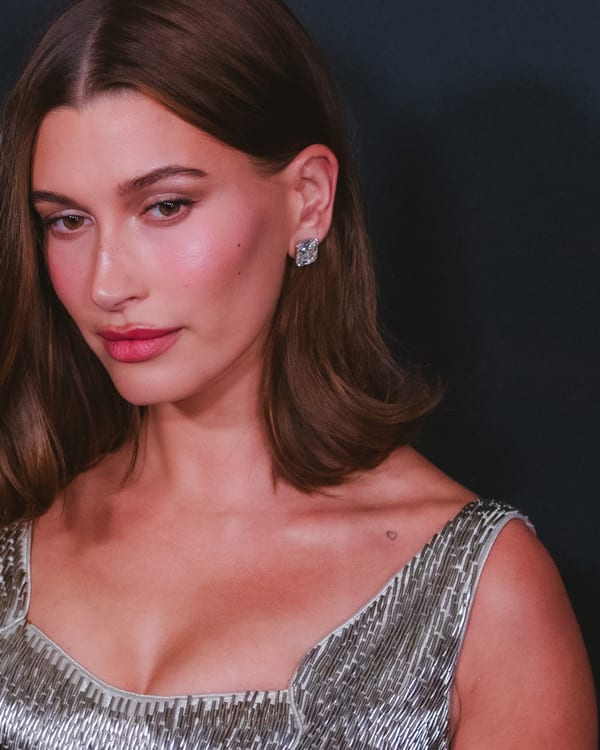
Selena Gomez has two companies with her name attached to the cap table, and they tell opposite stories about what a celebrity’s personal brand is actually worth.
The first is Rare Beauty, the cosmetics company she launched in 2020. Forbes reported in June 2025 that Gomez owns at least 51% of it, valued the company at roughly $1.3 billion, and put her net worth at about $700 million — enough to land her on Forbes’ list of America’s richest self-made women. Bloomberg had gone further nine months earlier, adding Gomez to its Billionaires Index in September 2024 at a $1.3 billion fortune, crediting her 51% Rare Beauty stake with a value north of $1.1 billion.
The second is Wondermind, a “mental fitness” media startup Gomez co-founded in November 2021 with her mother, Mandy Teefey, and entrepreneur Daniella Pierson. On August 13, 2026, two investor entities sued Gomez, Teefey, Pierson and the company itself in federal court in Delaware, alleging securities fraud, common-law fraud, breach of contract, conversion and unjust enrichment. The allegations have not been proven, and Gomez has moved to dismiss the case against her — but the lawsuit is a rare, detailed look at what happens when a celebrity’s name is used to raise money and the celebrity’s promised involvement doesn’t show up.
What Gomez actually built at Rare Beauty
Rare Beauty’s ownership structure is unusual among celebrity brands for how directly it tracks Gomez’s own hands-on role. She is the majority owner of a company generating real, audited-adjacent revenue — Forbes cited close to $370 million in 2023 sales — built around a specific creative premise (makeup marketed on approachability rather than aspiration) that Gomez has been publicly and consistently associated with steering since launch.
Because Rare Beauty is private, its valuation is a negotiated estimate rather than a market price, and the two headline analysts disagree on it: Forbes’ $1.3 billion figure (June 2025) and Bloomberg’s earlier $1.3 billion fortune estimate (September 2024) both trace back to the same 51% stake, priced with different assumptions about revenue multiples and growth. That’s not a contradiction so much as a reminder of a pattern this site keeps running into with celebrity-founder valuations — from SKIMS to Casamigos: a private number is whatever one analyst’s model says it is, and it can move by hundreds of millions of dollars depending on whose spreadsheet you’re reading.
The company with a different structure entirely
Wondermind looked, on paper, like a similar bet: a celebrity co-founder lending her name and audience to a venture-backed startup. Fortune reported that when Wondermind raised its $5 million Series A in August 2022 at a $100 million valuation, the round was led by Serena Williams’s Serena Ventures, with Lightspeed Venture Partners, Sequoia Capital and former Allergan CEO Brent Saunders also participating — a serious investor roster for an early-stage media company.
But the roles split differently than they did at Rare Beauty. Fortune’s 2022 reporting described Gomez’s title as chief impact officer, with responsibility for creative direction and marketing; Teefey, a Hollywood producer, ran the company’s production side; Pierson, founder of the newsletter business The Newsette, held the other co-CEO title alongside Teefey and was Wondermind’s operational lead. Gomez, in other words, was closer to Wondermind’s face than its operator — the inverse of her position at Rare Beauty.
What investors say happened next
By the time investors sued, Wondermind had, in the complaint’s words, quietly collapsed. A Forbes report in May 2025 said the company had failed to pay its employees and that Gomez personally covered the shortfall. A September 2025 investigation by The Cut detailed a company in disarray. Investors say they sent a formal notice demanding rescission of their investment in November 2025 and got no substantive response — and filed suit in Delaware federal court on August 13, 2026.
The complaint, brought by two investor entities, Wondermind SRS 44 LLC and Bespoke Wondermind SPV I LLC, over roughly $1.175 million invested in 2022 ($425,000 and $750,000, respectively), makes specific claims: that Pierson represented herself to investors as a “$200 million executive” whose Newsette business generated “$40 million a year,” when a Forbes investigation cited in the complaint found The Newsette’s actual valuation closer to $12.2 million with inflated subscriber counts; that celebrity cover-story partnerships — including names like Camila Cabello, Tim Cook, Elton John, Drake and Megan Thee Stallion — never materialized; and that Gomez, specifically, never performed the active, audience-leveraging marketing role investors say was a condition of the financing. The claims against the company and its founders include securities fraud, common-law fraud, breach of contract, conversion (against Pierson individually) and unjust enrichment. None of this has been proven — it is the plaintiffs’ account, laid out in a complaint a court has not yet ruled on.
Gomez’s response
Gomez’s attorney, Mathew Rosengart, filed a motion to dismiss the claims against her on August 27, 2026. His filing argues that “Ms. Gomez agreed to support her mother Mandy Teefey, who co-founded Wondermind… Although she invested in and holds a minority stake in the Company, Ms. Gomez never agreed to and did not manage the Company,” and calls the plaintiffs’ allegations against her “vague, generalized, and contradictory.” In a public statement, Rosengart went further: “The notion that Selena engaged in ‘fraud’ or any other wrongdoing is absurd — and in addition to filing our motion we are exploring other avenues of relief.” Pierson has separately denied misusing investor funds. Teefey has not issued a public statement addressing the suit directly.
The takeaway
Put the two companies side by side and the contrast is the actual lesson, not the scandal. Rare Beauty’s ownership math works because Gomez’s involvement is continuous, specific and matched to what she actually owns: a majority stake in a company whose creative direction she has visibly steered for five years. Wondermind’s math is now the subject of federal litigation because, investors allege, the promised version of Gomez’s involvement — active, marketing-driving, leveraging her following — was the thing being sold to raise the money, and it didn’t show up. A celebrity’s name can be genuine sweat equity or it can be collateral for a pitch deck; from the outside, both look identical until something goes wrong and a cap table gets read into a court record.
More ownership breakdowns: who actually owns SKIMS, Ryan Reynolds’ equity-over-endorsement playbook and how Casamigos became a $1 billion exit.
Frequently asked questions
How much of Rare Beauty does Selena Gomez own? Forbes reported in June 2025 that Gomez owns at least 51% of Rare Beauty, the cosmetics company she launched in 2020. Forbes valued the company at roughly $1.3 billion, based partly on close to $370 million in 2023 revenue, and put Gomez’s net worth at about $700 million. Separately, Bloomberg added Gomez to its Billionaires Index in September 2024, crediting her with a 51% stake worth more than $1.1 billion and a total fortune of $1.3 billion. Rare Beauty is privately held and does not publish a share register, so both figures are estimates, not filings.
What is Wondermind and what happened to it? Wondermind is a “mental fitness” media startup Gomez co-founded in November 2021 with her mother, Mandy Teefey, and entrepreneur Daniella Pierson. It raised $5 million at a $100 million valuation in an August 2022 Series A led by Serena Williams’s Serena Ventures, with Lightspeed Venture Partners, Sequoia Capital and former Allergan CEO Brent Saunders also participating, according to Fortune. A Forbes report in May 2025 said the company had failed to pay employees and that Gomez personally covered the shortfall. A September 2025 investigation by The Cut described a company in disarray. Investors say in a subsequent lawsuit that Wondermind quietly collapsed.
What does the Wondermind lawsuit against Selena Gomez allege? Two investor entities, Wondermind SRS 44 LLC and Bespoke Wondermind SPV I LLC, sued Gomez, Teefey, Pierson and Wondermind in Delaware federal court on August 13, 2026, over roughly $1.175 million invested in 2022. The complaint alleges securities fraud, common-law fraud, breach of contract, conversion (against Pierson specifically) and unjust enrichment. It claims the founders misrepresented the company’s partnerships, an app that was never built, and co-founder Daniella Pierson’s business track record, and that Gomez never fulfilled a contracted, active marketing role built around her social-media following. The allegations have not been proven in court.
How has Selena Gomez responded to the lawsuit? Gomez’s attorney, Mathew Rosengart, filed a motion to dismiss on August 27, 2026, calling the fraud claims against her “absurd” and arguing that Gomez “invested in and holds a minority stake in the Company” but “never agreed to and did not manage” it. He has said the allegations against her specifically are “vague, generalized, and contradictory.” Co-founder Daniella Pierson has separately denied misusing investor funds. The case remains pending.
Is Selena Gomez a billionaire? It depends who is counting and when. Bloomberg’s Billionaires Index credited Gomez with a $1.3 billion fortune in September 2024, built almost entirely on her Rare Beauty stake. Forbes, using its own valuation of the company, put her net worth at roughly $700 million as of June 2025. Both figures rest on the same asset — a majority stake in a private company — priced by two different analysts using two different multiples, which is exactly why the number moves as much as it does.